Welcome!
Get ready for an extraordinary journey through nebulae and galaxies. Explore the infinite universe captured by the lens of a telescope, where each shot reveals a celestial story and unveils the hidden secrets of the cosmos.
-
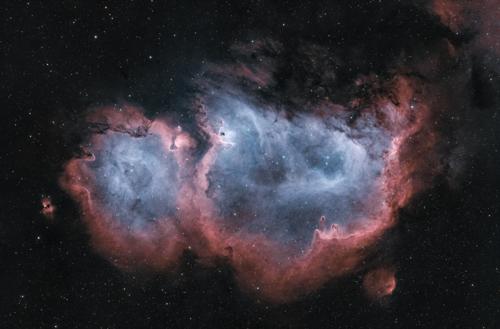
Soul Nebula (IC 1848)
Twenty-nine hours of exposure on a stellar nursery a hundred light years wide, where the winds of young stars carve pillars and arches. -
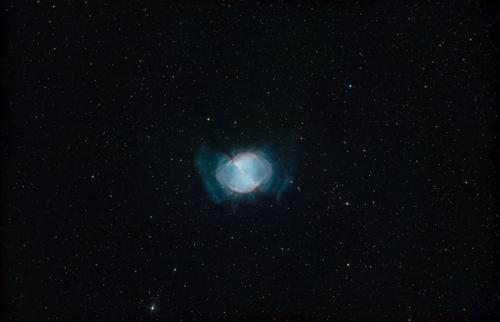
Dumbbell Nebula (M27)
The first planetary nebula ever discovered: the outer layers of a Sun-like star, blown away at the end of its life. -
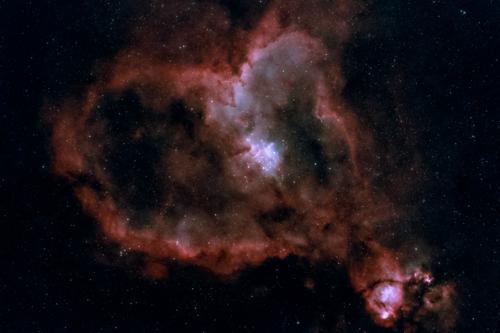
Heart Nebula (IC 1805)
A heart of hydrogen two hundred light years wide, carved by the wind of a handful of very young stars. -
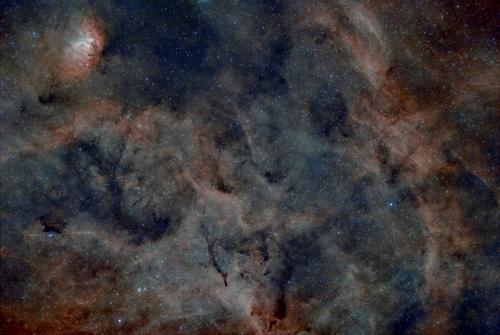
Tulip Nebula (Sh2-101)
A flower of hydrogen in Cygnus, sharing its field with the first black hole ever identified. -
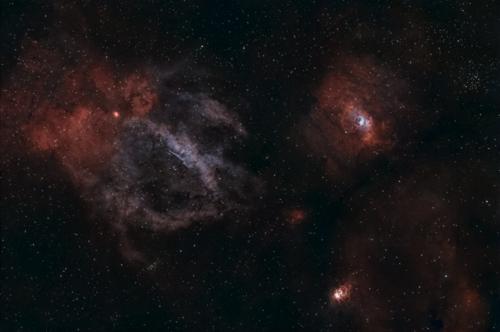
Bubble and Lobster Claw (NGC 7635 and Sh2-157)
A bubble blown into the gas by the wind of a single star, beside a nebula shaped like a pincer. -
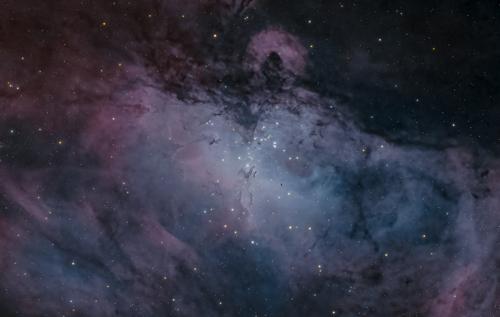
Eagle Nebula (M16)
The cloud that holds the Pillars of Creation: columns of gas light years tall, carved by the light of newborn stars. -
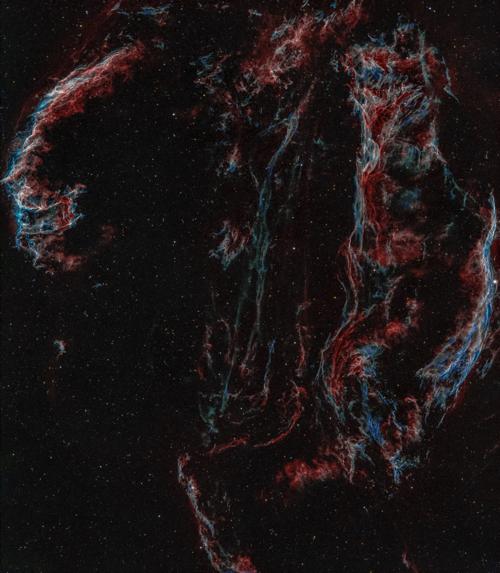
Ripples in the Sky (Veil Nebula)
What remains of a star that exploded fifteen thousand years ago: filaments of gas still racing across Cygnus. -
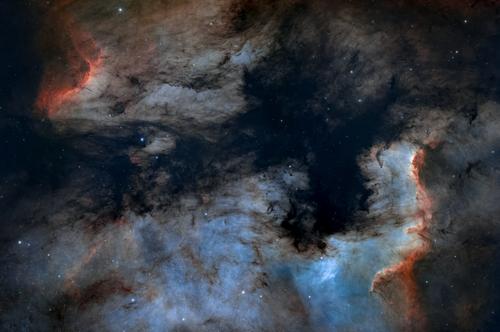
Cygnus Nebulosity
The Cygnus Nebulosities is an enormous complex of dark nebulae and interstellar dust, spanning the northern branch of the Milky Way. -
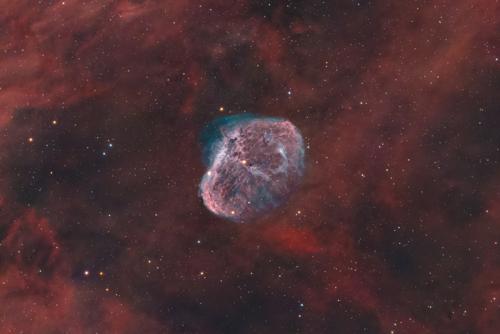
Boltzmann's Brains
The Crescent Nebula (NGC 6888) is one of the mysterious Boltzmann brains??? -
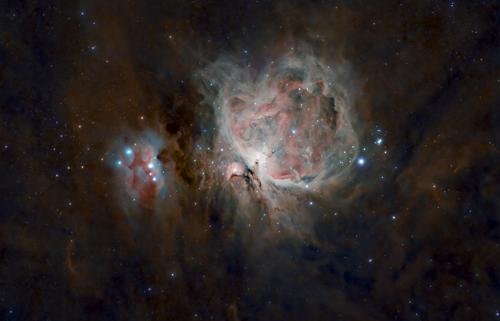
Orion Nebula (M42)
The nearest stellar nursery: a thousand stars forming inside a cloud visible to the naked eye below Orion's Belt. -
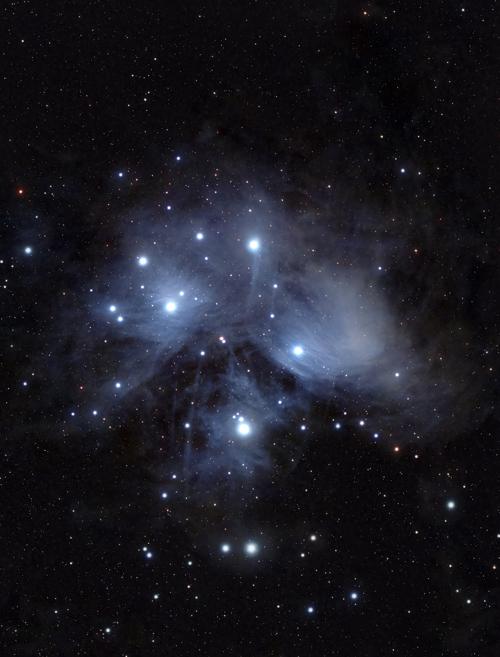
Pleiades (M45)
The Seven Sisters: very young blue stars wrapped in a veil of dust that reflects their light. -
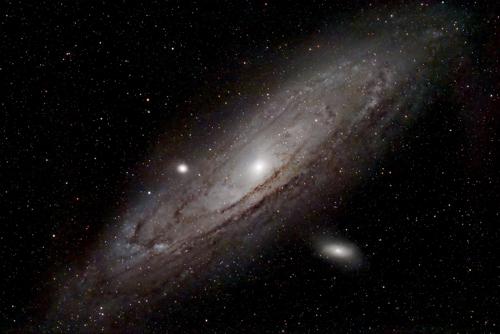
Andromeda Galaxy (M31)
The great neighbouring spiral, the farthest thing the naked eye can see. And behind the name, a tale of vanity, spite and revenge: rightly so. -
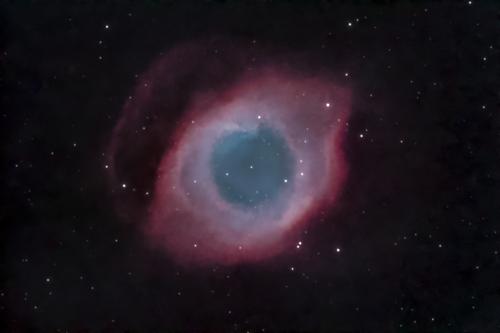
Celestial Wells (Helix Nebula)
Six nights of exposure from a city sky to bring out the faint inner nebulosity of the Helix, the closest planetary nebula to us. -
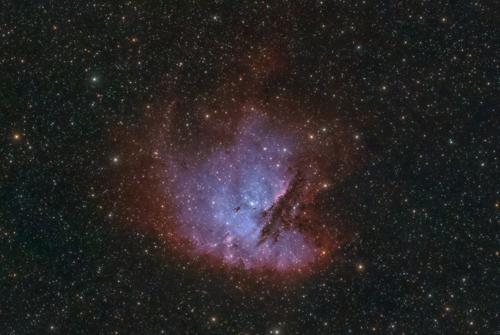
Pacman Nebula (NGC 281)
A cloud of hydrogen with a bite of dark dust taken out of it: the shape that earned it a video-game name. -
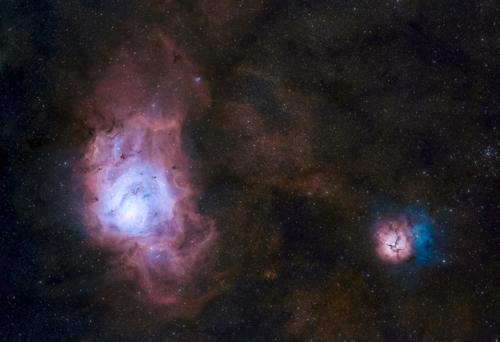
Lagoon and Trifid (M8 and M20)
Two neighbouring nebulae in the heart of the Milky Way: a vast lagoon of hydrogen and its companion cut in three. -
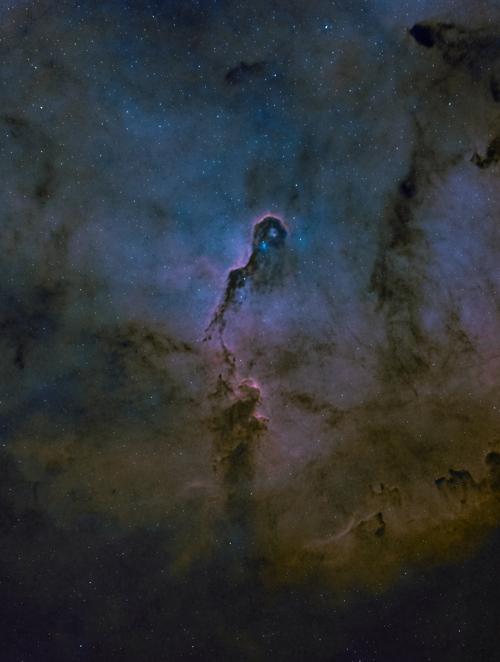
Elephant Trunk (vdB 142)
A column of dust twenty light years long, lit from the side by the star that is consuming it. -
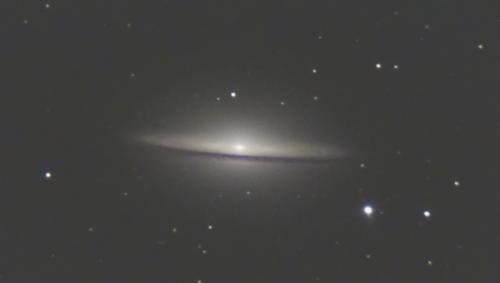
Sombrero Galaxy (M104)
A bulge of old stars cut clean through by a lane of dust: the galaxy that looks like a hat. -
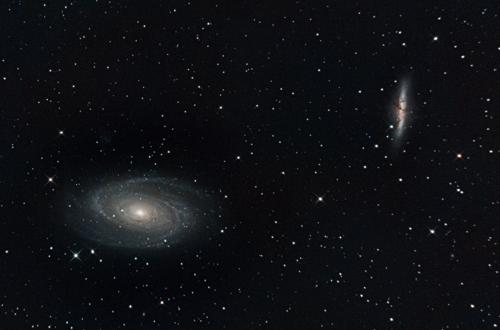
Bode's and Cigar Galaxies (M81 and M82)
Two neighbouring galaxies bound by gravity: an orderly spiral and its disturbed companion, blowing gas out of its centre. -
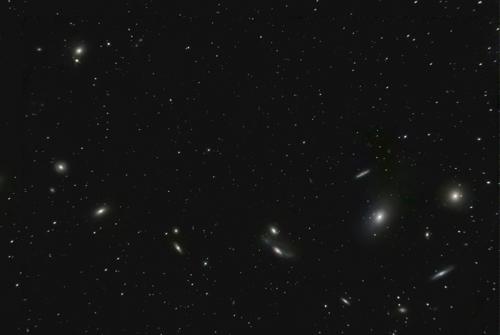
Universal Golden Ratio (Markarian's Chain)
Seven interacting galaxies along a curve. And a question: what if they followed the Fibonacci spiral? -
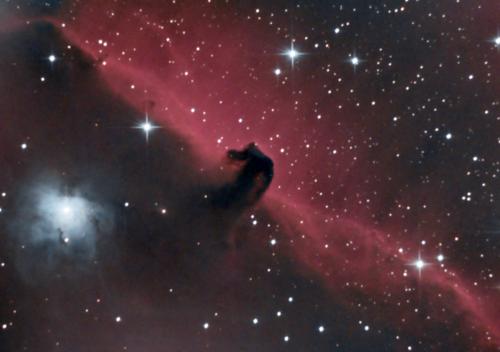
Horsehead and Flame
The most recognisable silhouette in the sky: a cloud of dust standing against the glowing hydrogen of Orion's Belt. -
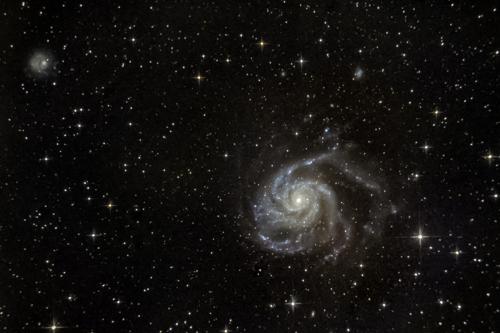
Pinwheel Galaxy (M101)
A spiral twice the size of our own, warped by five companion galaxies tugging at its arms. -
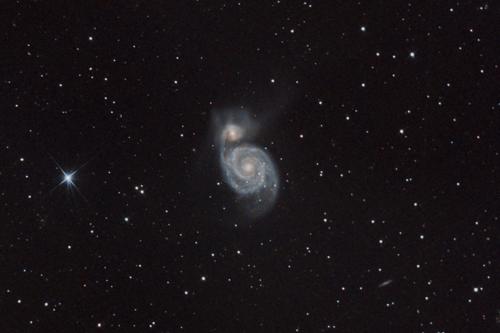
Whirlpool Galaxy (M51)
Two galaxies passing through each other: the most photogenic spiral in the sky and the companion warping its arms.


